
SONARPOINT · LOCALIZING PAM ARRAY
The ocean,
made transparent.
SonarPoint arrays record the entire underwater soundscape for a large area. It shows when a sound happened, and exactly where — on a 3D map.
Watch the timelapse video System Selector Guide
Field-validated under the U.S. Navy Living Marine Resources program
SEE IT IN ACTION
Not just what — but where
A conventional acoustic recorder tells you that a whale, a boat or a vehicle was somewhere within earshot. SonarPoint tells you where each sound came from, moment by moment.
Every mooring keeps GPS-synchronized time, so the tiny differences in when a sound reaches each one fix its position. The result is a living map of the soundscape: who is calling, from where, and who answers.
- Each dot is one localized call; color shows the species group
- White triangles are SonarPoint moorings
- 12 days in Monterey Bay, Oct 28 – Nov 9, 2025
THE SYSTEM
From seafloor to software
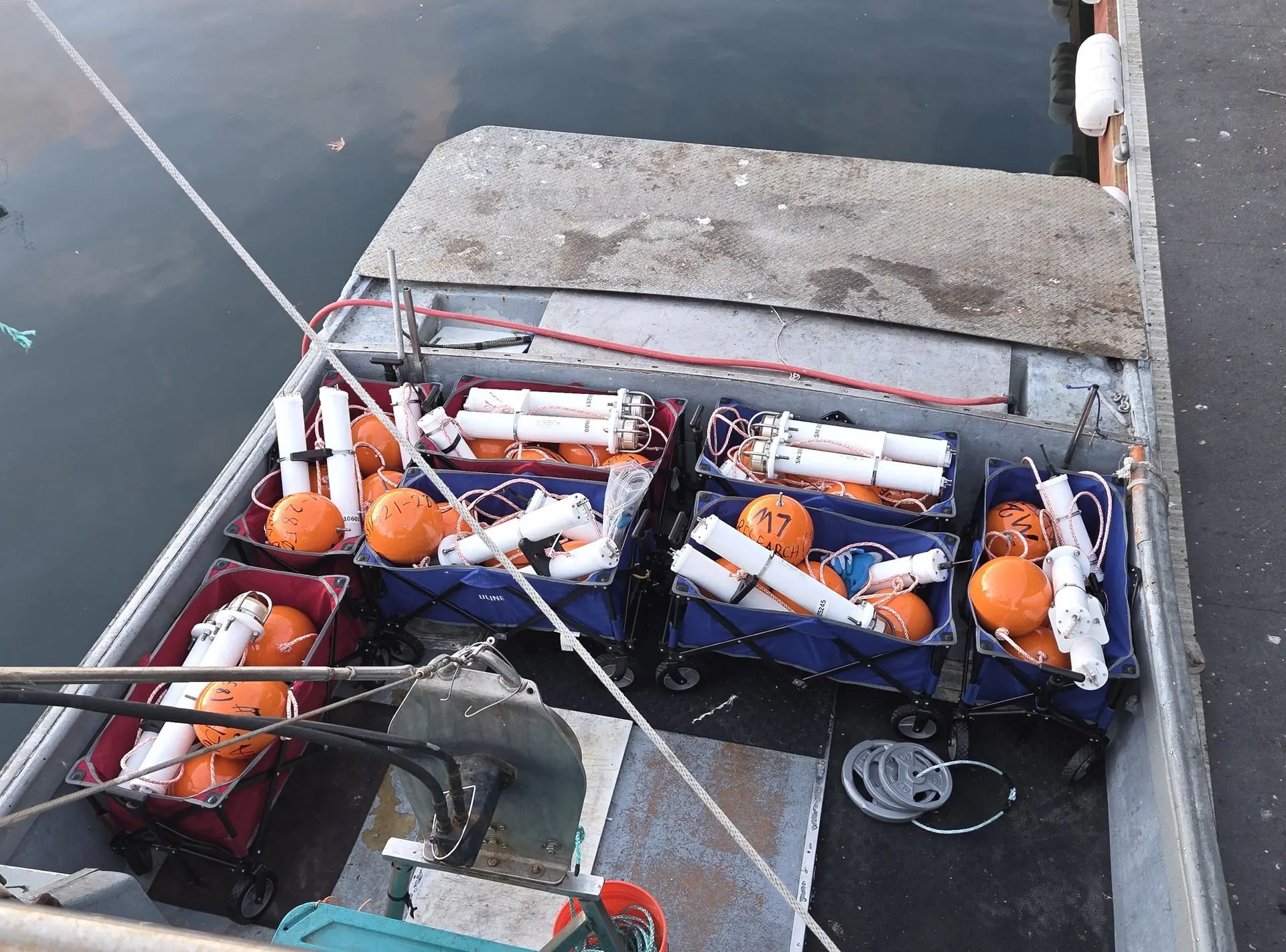
Significance & Origins
Born from a Navy need for whale density estimates, now tracking sound sources across hundreds of square kilometers.
Learn more →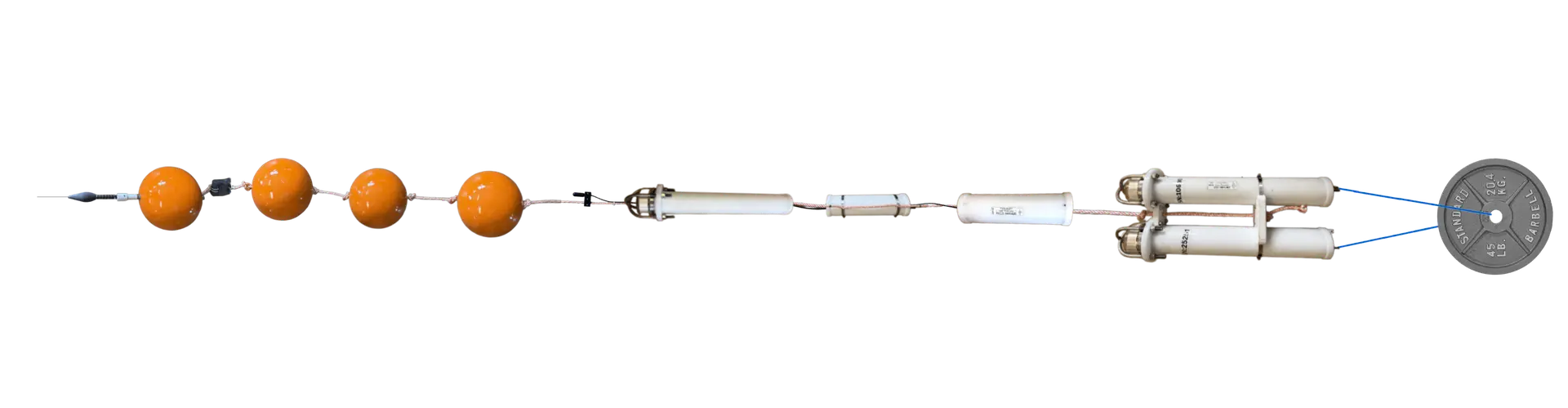
One integrated system, seafloor to software
Recorders, releases, floats, satellite locators and deck gear designed to work together, so there is nothing to integrate.
View system components →Deployed from a small boat in a day
Synchronize, deploy, survey and recover with one deck box and a small crew.
Study the workflow →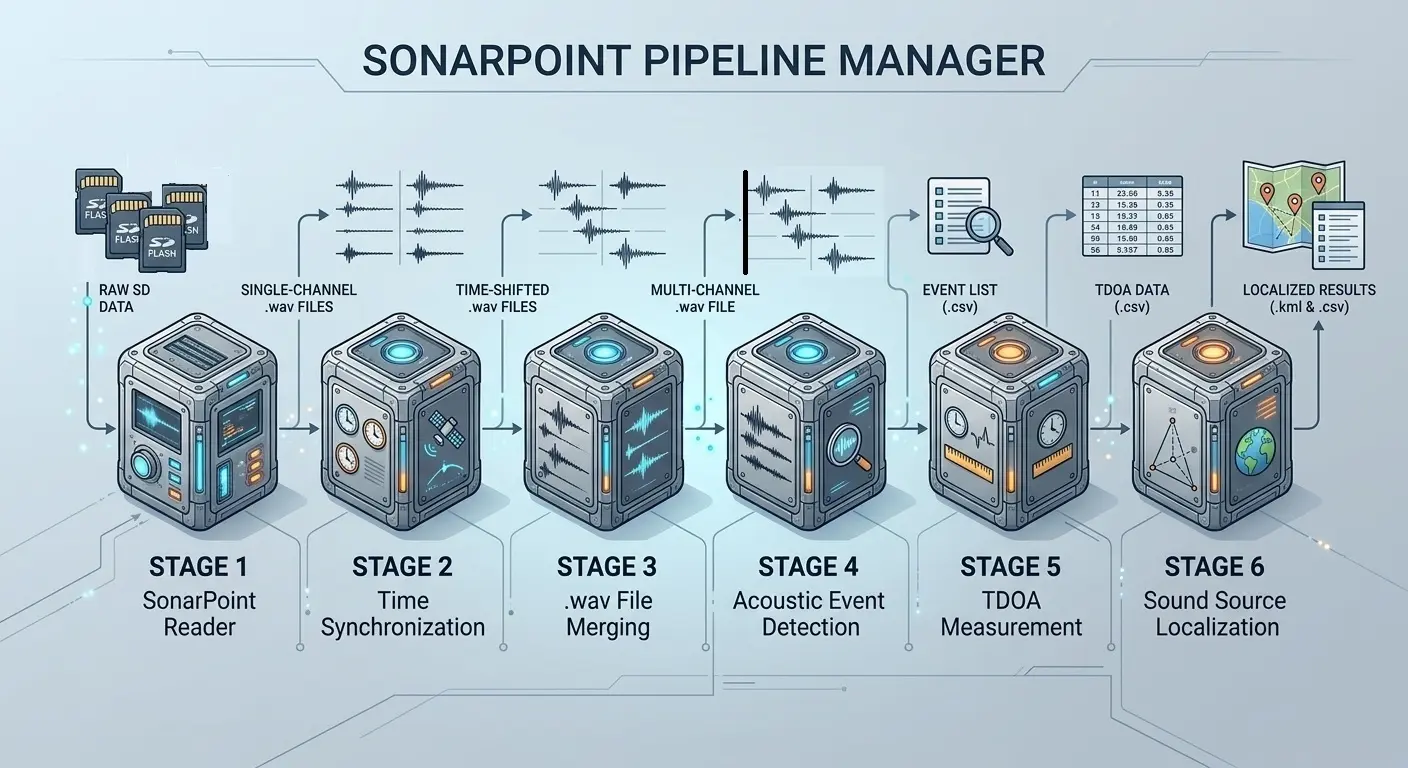
From recordings to mapped positions
Six guided steps from raw data to validated 3D positions, in standard formats that work with PAMGuard and other tools.
Review the processing pipeline →FIELD PROVEN
Tested at sea, checked against ground truth
3D tracking of a predation event
A five-mooring array tracked killer whales in 3D as they fed on a gray whale calf, confirmed by observers on the water.
Read the story →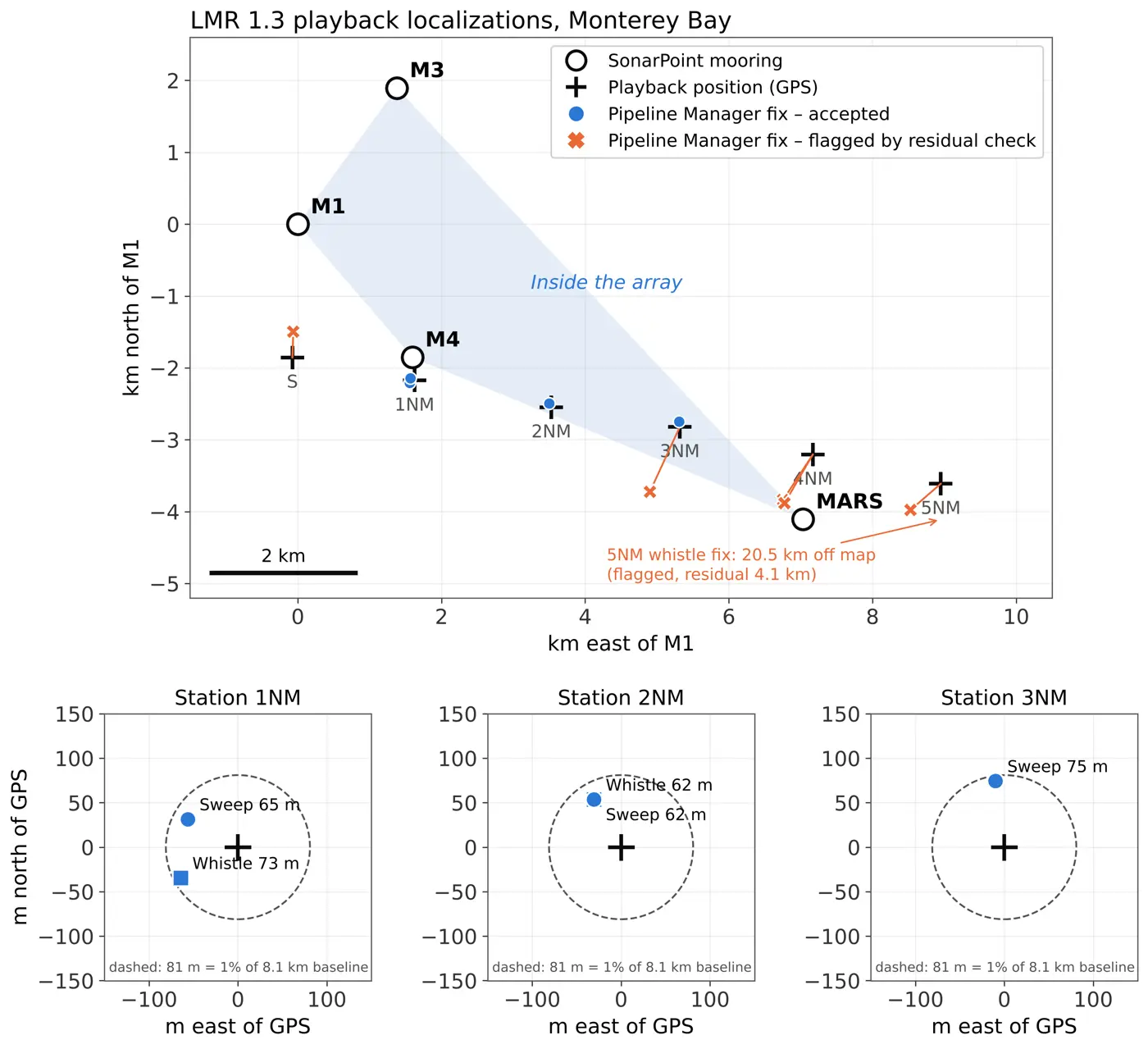
62–75 m
Accuracy checked against GPS
Sounds played at known GPS positions were placed within about 1% of mooring spacing across an 8 km array. A built-in quality check flagged every poor fix.
See the results →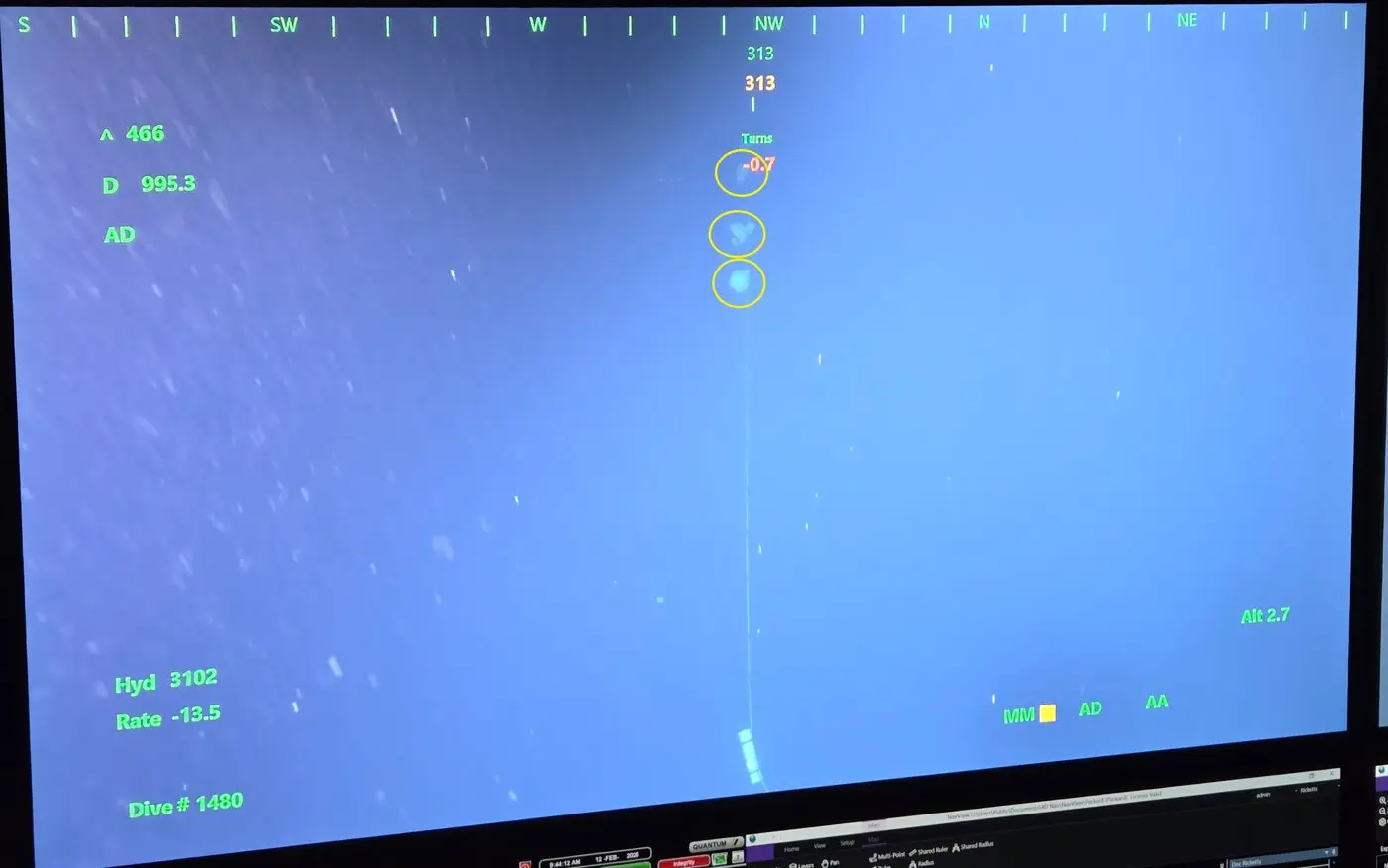
Survived a 1,000 m implosion
Third-party floats imploded at depth (ROV view). The SonarPoint recorder and ARC release survived and kept recording. Deep systems now use implosion-proof syntactic foam.
Read more →SCALES TO YOUR AREA
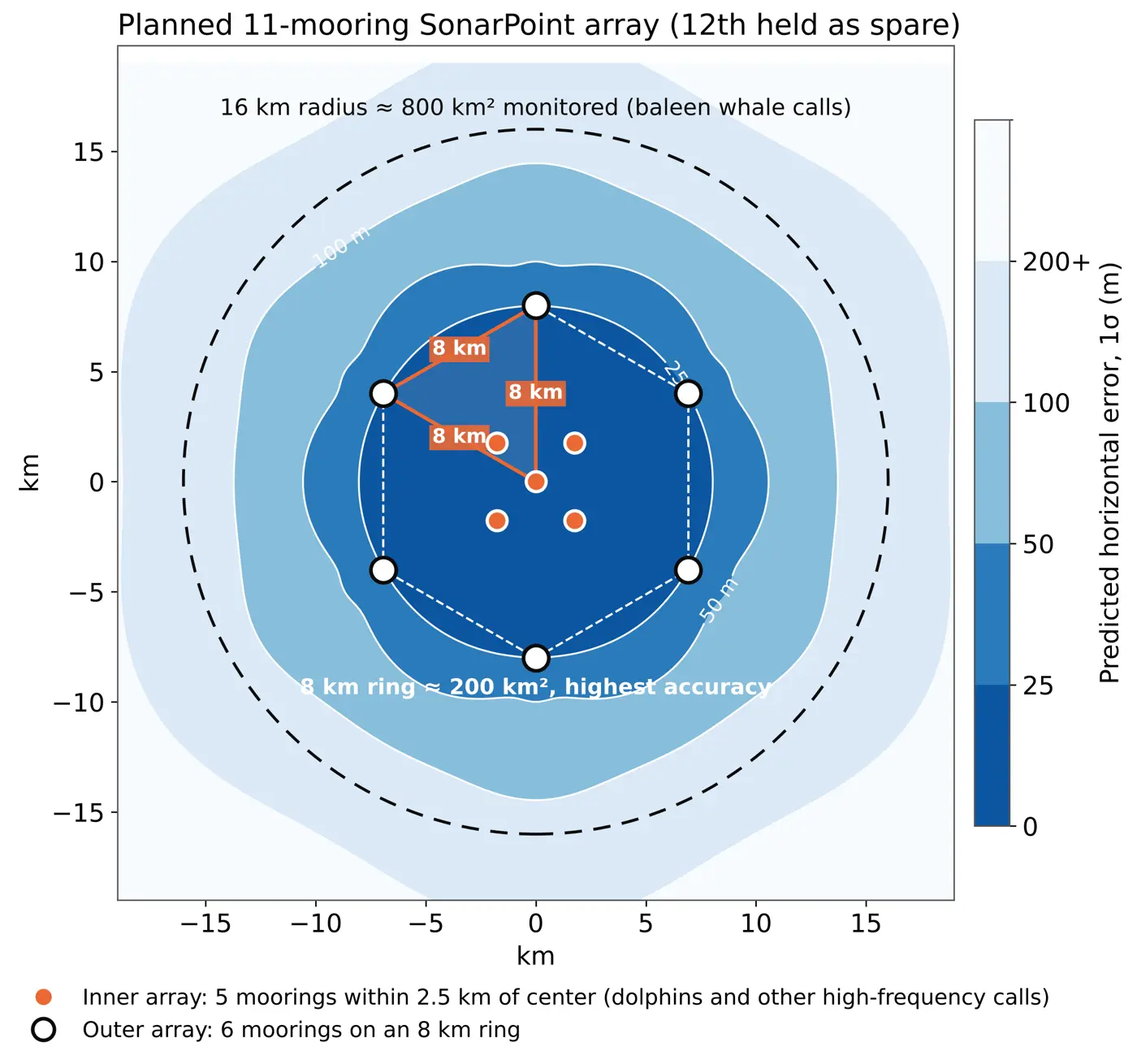
One array, up to 800 km²
A compact inner array captures dolphins and other high-frequency callers. An outer hexagon of moorings 8 km out extends coverage for baleen whales. Every point inside sits within about 8 km of at least three moorings.
up to 800 km²
monitored, baleen whale calls
~1%
of mooring spacing, positional accuracy
300–1,800 m
depth-rated configurations
up to 14 months
continuous recording (with external battery)
APPLICATIONS
SonarPoint use cases
SonarPoint was developed to track whales, but it localizes any sound source heard by four or more moorings. Wherever you need to know what is moving underwater, and where, it can help.
Marine mammal research
Follow vocalizing animals in 3D. Study call-and-response, group spacing and behavior, and estimate density.
Ship-strike mitigation
Map where whales actually are relative to shipping lanes and port approaches, to inform speed zones and routing.
Offshore construction monitoring
Know whether animals are inside an exclusion zone during pile driving or dredging, and measure noise at known distances.
Harbor & infrastructure security
Detect and track uncrewed underwater vehicles, divers and small craft at choke points, with no cables or permanent installation.
Vessel activity in protected areas
Locate boat traffic in sanctuaries and closed fishing areas, including vessels not broadcasting AIS.
Portable underwater tracking ranges
Track vehicles and sound sources during trials, then recover the array when testing ends.
Have an application in mind? Tell us where you want to listen →
FAQ
Common questions
Inside the array, about 1% of the mooring spacing. In a GPS-checked test across an 8 km array, positions fell within 62–75 m. Compact arrays can do much better. Every position carries a residual that flags unreliable fixes.
Any sound received on at least three moorings: baleen whale song, dolphin whistles and burst pulses, echolocation clicks, vessels and other man-made sources. Recorders sample up to 416 kHz and cover 2 Hz to 208 kHz with the HTI hydrophone.
It separates calls coming from different places at the same time, which is the first step toward telling individuals apart. Linking repeated songs or call types to one animal over time is an open research question that SonarPoint makes approachable.
Humpback, fin and blue whales, plus delphinids. Killer whales were tracked during an earlier deployment, during a predation event on a gray whale calf.
Please contact us at salesinfo@desertstar.com with your specific interest.
Moorings are rated to 300, 1,000 or 1,800 m and need no cables or shore power. We have deployed under a National Marine Sanctuary permit and can advise on site planning. Tell us where, contact us at salesinfo@desertstar.com.
From 20 days to about 14 months of continuous recording at 100 kHz, depending on configuration. The longest deployments use the SPB1800-175Ah external battery pack to greatly extend the endurance of the SPxxxx-8 recorder. The recorder has eight SD card slots, for a total of 8 TB when using 1 TB cards - sufficient for 14 months when a 100 KHz sample rate is used, or about 4 months at 312.5 KHz sampling to capture very high frequency vocalizing animals such as porpoises.
A small vessel, a small crew, the supplied deck box and pinger pole, and a Windows laptop for processing. Training is available.
See the starter configurations in the System Selector Guide and current pricing on the price list.
GET STARTED
Let's discuss your project
Let us know what is on your mind or what questions you have via this form. We'll get back to you. Ask for a telecon as that is often the fastest way to work through a project. For an idea of SonarPoint pricing right now, click on the Price List button.
salesinfo@desertstar.com · 510 Lighthouse Ave #5, Pacific Grove, CA 93950