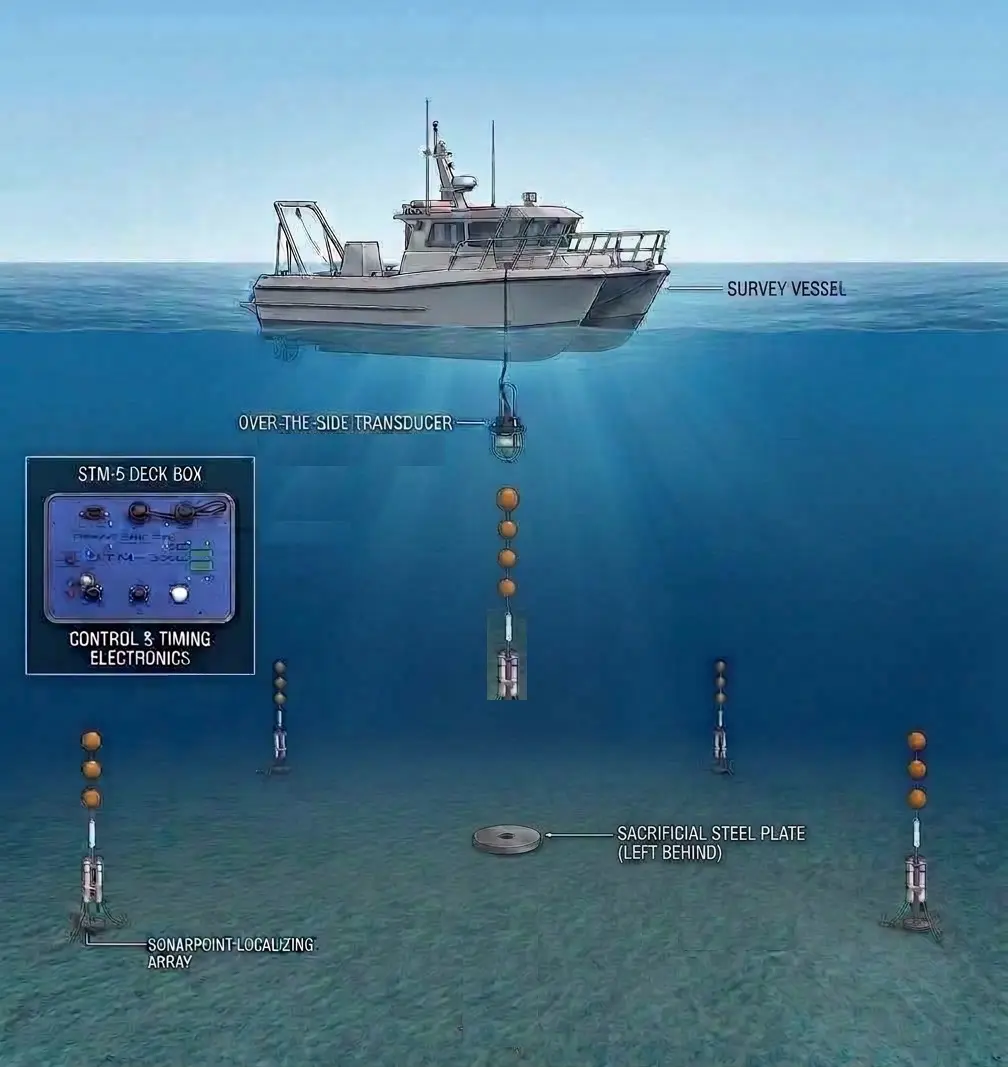
Phase 1: Array Synchronization & Deployment
Prior to deployment, all recorders are powered up. The recorders automatically self-calibrate and synchronize their clock using atomic scale precision GPS signals. Acoustic recording starts immediately thereafter. Each mooring string is lowered over the side and descends to the seafloor. The GPS deployment location of each string is noted.
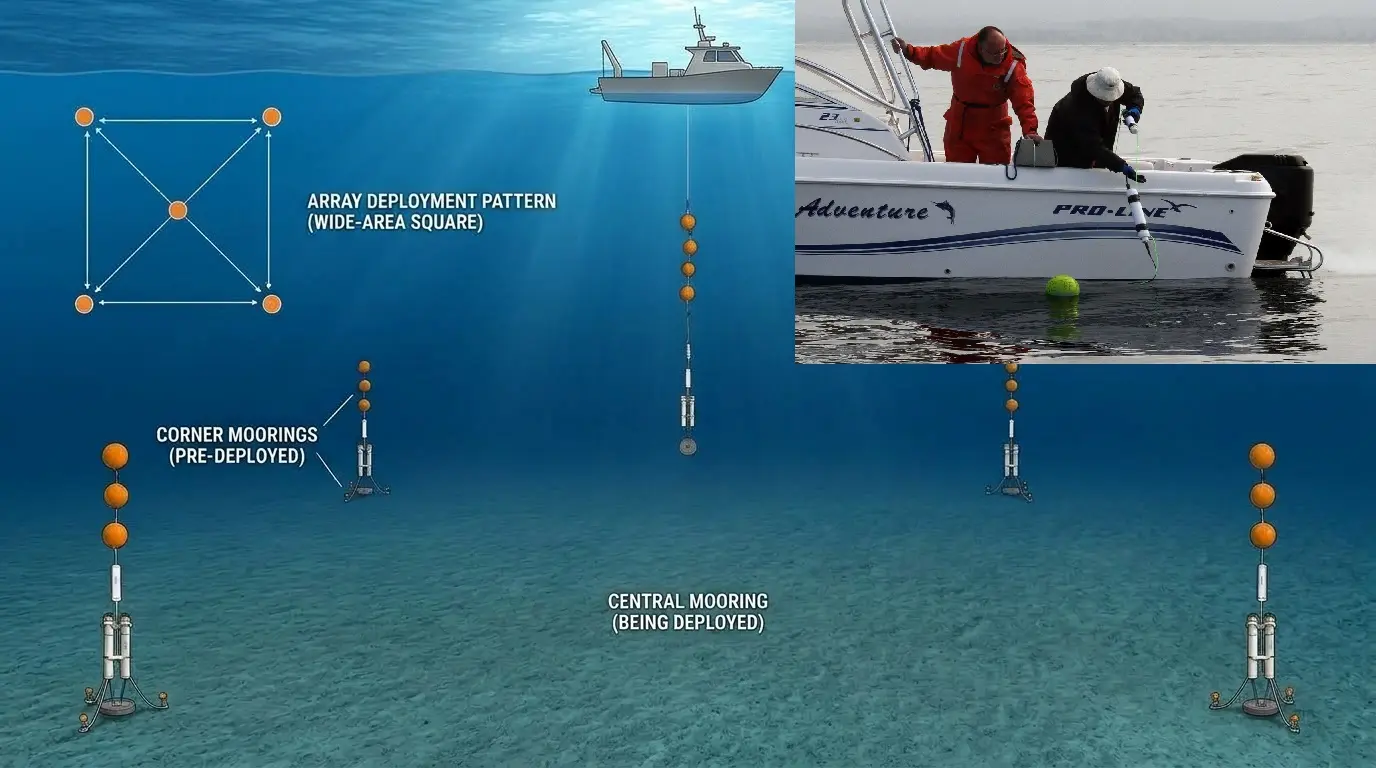
Phase 2: Pinger Pole Acoustic Array Survey.
Moorings may drift off the GPS measured surface location due to tidal or ocean currents. To compensate, the vessel executes a slant-range survey using a surface GPS/pinger pole to pinpoint the exact resting coordinates of each seafloor node.
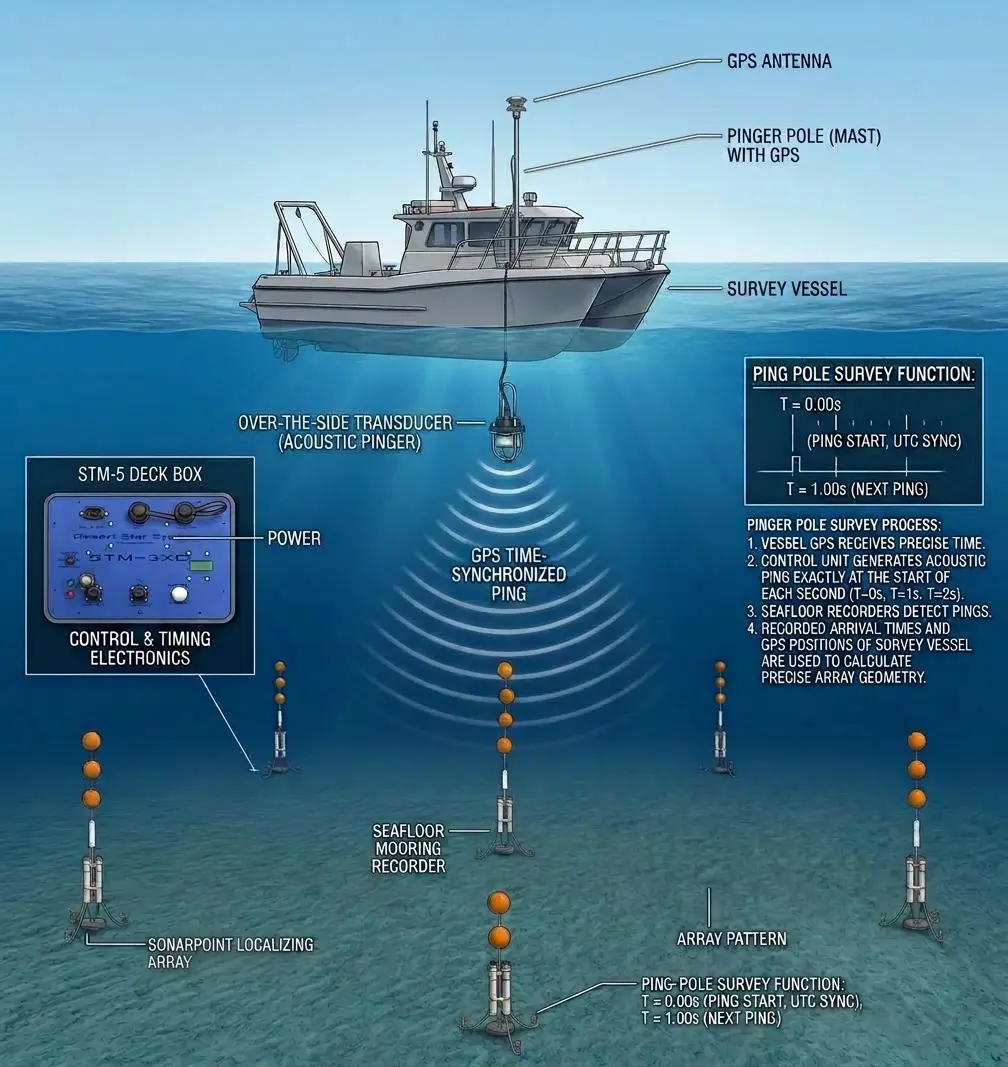
Phase 3: Observation
The recorders in the array quietly monitor the acoustic environment. As precise time synchronization is maintained across all recorders, the acoustic soundscape is sampled at each recorder in a way that permits precise Time Differences of Arrival (TDOA) to be measured for any acoustic signature post-recovery of the array.
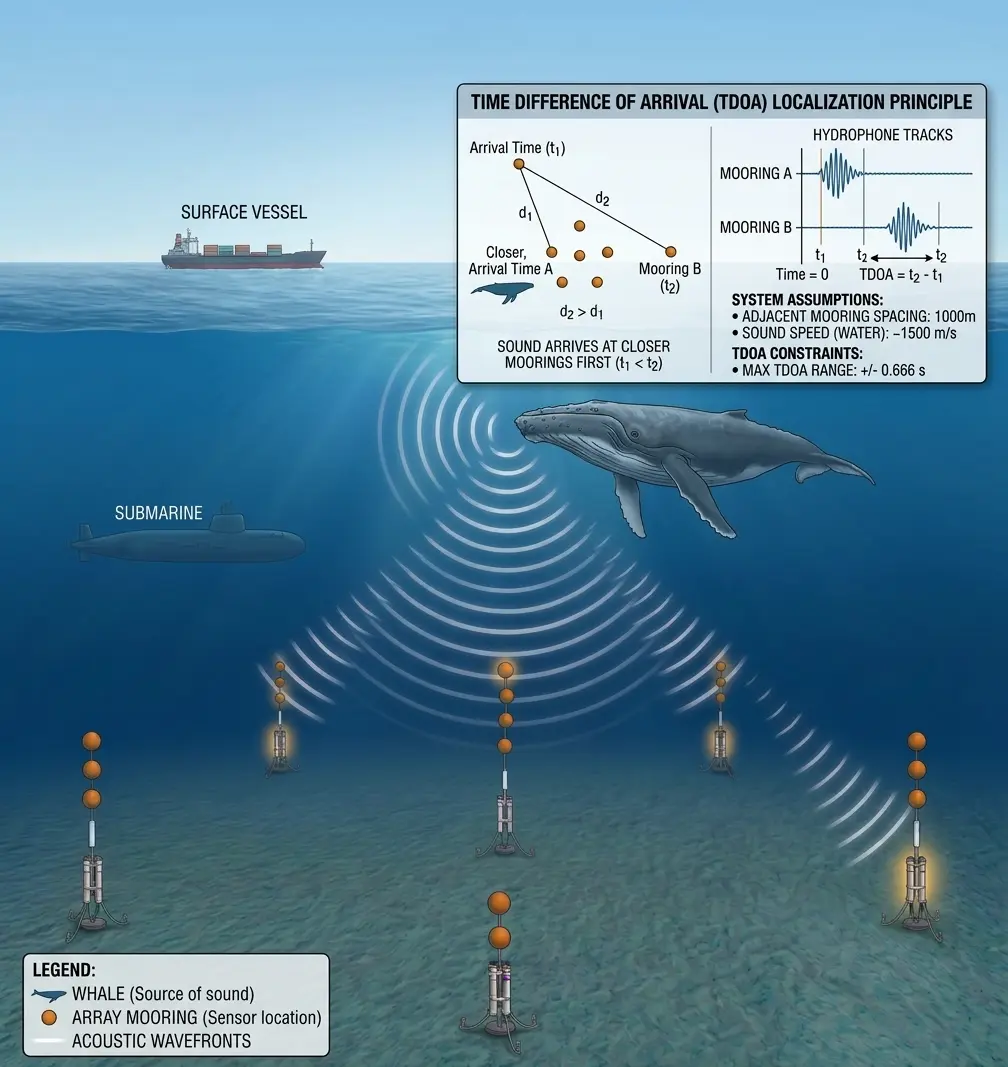
Phase 4: Array Recovery
Mooring strings are commanded back to the surface via the ARC acoustic release, dropping a sacrificial weight to initiate the ascent. The same deck box and over-the-side sonar transducer is used for both the pinger pole acoustic array survey and for array recovery.